

扫描下方二维码,到科利耳®官方微信获取更多信息。

双模式聆听的好处
双耳协同工作,大脑需要双耳才能有效地处理声音。1 对于许多人来说,一侧佩戴助听器,另一侧佩戴人工耳蜗的双模式 (bimodal) 聆听方案,是能为他们提供更佳听力效果的解决方案。
双模式聆听用户报告称获得了更自然的聆听体验,2 在安静和嘈杂环境中的言语理解能力得到提升,3-6 音乐感知能力增强,7 并且在现实生活环境中的表现更好。3
为了提供出色的聆听体验和先进的连接性能,我们与助听器行业的先驱 ReSound 合作,提供智能双模式聆听解决方案。
智能聆听联盟的双模式解决方案
科利耳和瑞声达共同组建了智能听力联盟,确保当您同时需要助听器和听力植入体时,我们的产品能够无缝配合。智能听力联盟的双模式聆听解决方案不但具备双模式聆听的所有好处,还拥有其他优势。
佩戴科利耳人工耳蜗和 ReSound 助听器的双模式用户在嘈杂环境中听清声音,也发现打电话更容易。9
智能听力联盟率先推出了智能双模式聆听解决方案,将音频流直接从兼容的 Apple 或 Android™ 安卓设备传输到双耳。*
Cochlear (科利耳) 与 ReSound 在智能听力联盟 (Smart Hearing Alliance) 中合作,为您开发先进且创新的听力解决方案。
智能双模聆听解决方案
更智能的配对要获得智能双模式聆听解决方案体验,您需要:
|
控制和信心使用兼容的 Apple 或 Android 设备直接控制您的声音处理器和助听器设置,从而个性化您的聆听体验。* |
将音频流同步传输到两只耳朵将通话、音乐和娱乐内容从兼容的 Apple 或 Android™ 设备直接流式传输到兼容的声音处理器和助听器。* |
其他双模式聆听选择方案
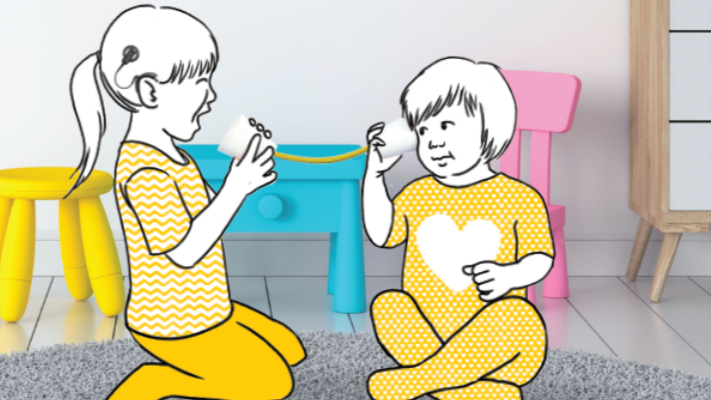
双模式聆听提供多种设备组合方案,既能确保佩戴舒适,又能助您利用双耳获得更佳聆听效果
Nucleus 8、Nucleus 7 或 Kanso 2 声音处理器和各种助听器您可以将音频流直接从兼容的 Apple 或安卓设备传输到 Nucleus 8、Nucleus 7 或 Kanso 2 声音处理器,享受双模式聆听的好处。* |
科利耳声音处理器和各种助听器在一只耳朵佩戴科利耳声音处理器,另一只耳朵搭配任意经专业验配的助听器,您即可从双模式聆听中获益。 |



免责声明
ReSound (瑞声达) 隶属于 GN (大北欧) 集团。GN 通过智能音频解决方案让生活更动听。
* 有关兼容性信息和设备,请访问 cochlear.cn/compatibility and resound.com/compatibility。
请向医疗专业人士寻求有关治疗听力损失的专业建议。效果可能因人而异,医疗专业人士会告知您可能影响治疗效果的因素。请务必遵循使用说明。并非所有产品都在所有国家/地区提供。请联络您当地的科利耳代表,了解产品信息。
请仔细阅读产品说明书,并在医疗专业人士的指导下购买或使用产品,请参阅说明书了解禁忌内容或注意事项。
有关科利耳商标的完整列表,请访问我们的 使用条款页面。
所述观点仅代表个人意见。请咨询医疗专业人士,确定您是否适合使用科利耳技术。
人工耳蜗声音处理器
国械注进20252120572, 国械注进20232120444, 国械注进20242120452
禁忌内容或者注意事项详见说明书
广告 请仔细阅读产品说明书或者在医务人员的指导下购买和使用。
Apple、Apple 徽标、FaceTime、Made for iPad 徽标、Made for iPhone 徽标、Made for iPod 徽标、iPhone、iPad Pro、iPad Air、iPad mini、iPad 以及 iPod touch 是 Apple Inc.在美国和其他国家/地区注册的商标。App Store 是 Apple Inc.在美国和其他国家/地区注册的服务标志。
Android 是 Google LLC 的商标。Android 机器人基于 Google 创造和共享的作品复制或修改而成,并根据《Creative Commons 3.0 Attribution License》所述条款予以使用。
参考文献
- Weaver, J. "Single-Sided Deafness: Causes, and Solutions, Take Many Forms." Hearing Journal 68.3 (2015): 20-24. Web. (2017 28 Apr). http://journals.lww.com/thehearingjournal/Fulltext/2015/03000/Single_Sided_Deafness___Causes,_and_Solutions,.1.aspx.
- Farinetti A, Roman S, Mancini J, et al. Quality of life in bimodal hearing users (unilateral cochlear implants and contralateral hearing aids). Eur Arch Otorhinolaryngol (2015 Nov); 272, 3209–3215.
- Ching TY, Incerti P, Hill M. Binaural benefits for adults who use hearing aids and cochlear implants in opposite ears. Ear Hear (2004 Feb); 25, 9–21.
- Morera C, Cavalle L, Manrique M, et al. Contralateral hearing aid use in cochlear implanted patients: Multicenter study of bimodal benefit. Acta Otolaryngol (2012 Jun); 132, 1084–1094.
- Potts LG, Skinner MW, Litovsky RA., et al. Recognition and localization of speech by adult cochlear implant recipients wearing a digital hearing aid in the nonimplanted ear (bimodal hearing). J Am Acad Audiol (2009 Jun); 20, 353–373.
- Gifford RH, Dorman MF, McKarns SA, Spahr AJ. Combined electric and contralateral acoustic hearing: Word and sentence recognition with bimodal hearing. Journal of Speech, Language, and Hearing Research. (2007 Aug) 1;50(4):835-43.
- Sucher CM, McDermott HJ. Bimodal stimulation: benefits for music perception and sound quality. Cochlear Implants International. (2009 Jan); 1;10(S1):96-9.
- Clinical evaluation of the Cochlear Nucleus® CI532 cochlear implant in adults (CLTD5685). (2019 Jan). [由科利耳赞助]。
- 科利耳有限公司 (Cochlear Limited)。D1627134. Cochlear Bimodal Experience Survey - April 2019. (2019 Jun).